
Behind the case file
How Midsomer is made.
The county survives changes in cast, producer, camera and platform because a long production memory keeps rebuilding the same fictional world.
Programme-makers
The people behind the continuity.
- Betty Willingale
Willingale developed Caroline Graham’s material for television, recruited John Nettles, produced the pilot and early series, and remained a consultant. John and Sarah Barnaby’s daughter Betty was named in her honour.
- Anthony Horowitz
Horowitz was a decisive early architect and writer. His contribution is best described through that specific development and writing work, rather than the broader and less precise label of sole programme creator.
- Brian True-May
The producer shaped the long middle period. His 2011 comments about ethnic representation caused a major controversy; his departure marked a production transition rather than the end of the programme’s visual identity.
- Long-serving departments
Careers such as Paul Booth’s—from supervising art director on Series 6–8 to production designer across Series 14–22—show how institutional memory crossed lead actors and production regimes.
Building Causton
One town, spread across counties.
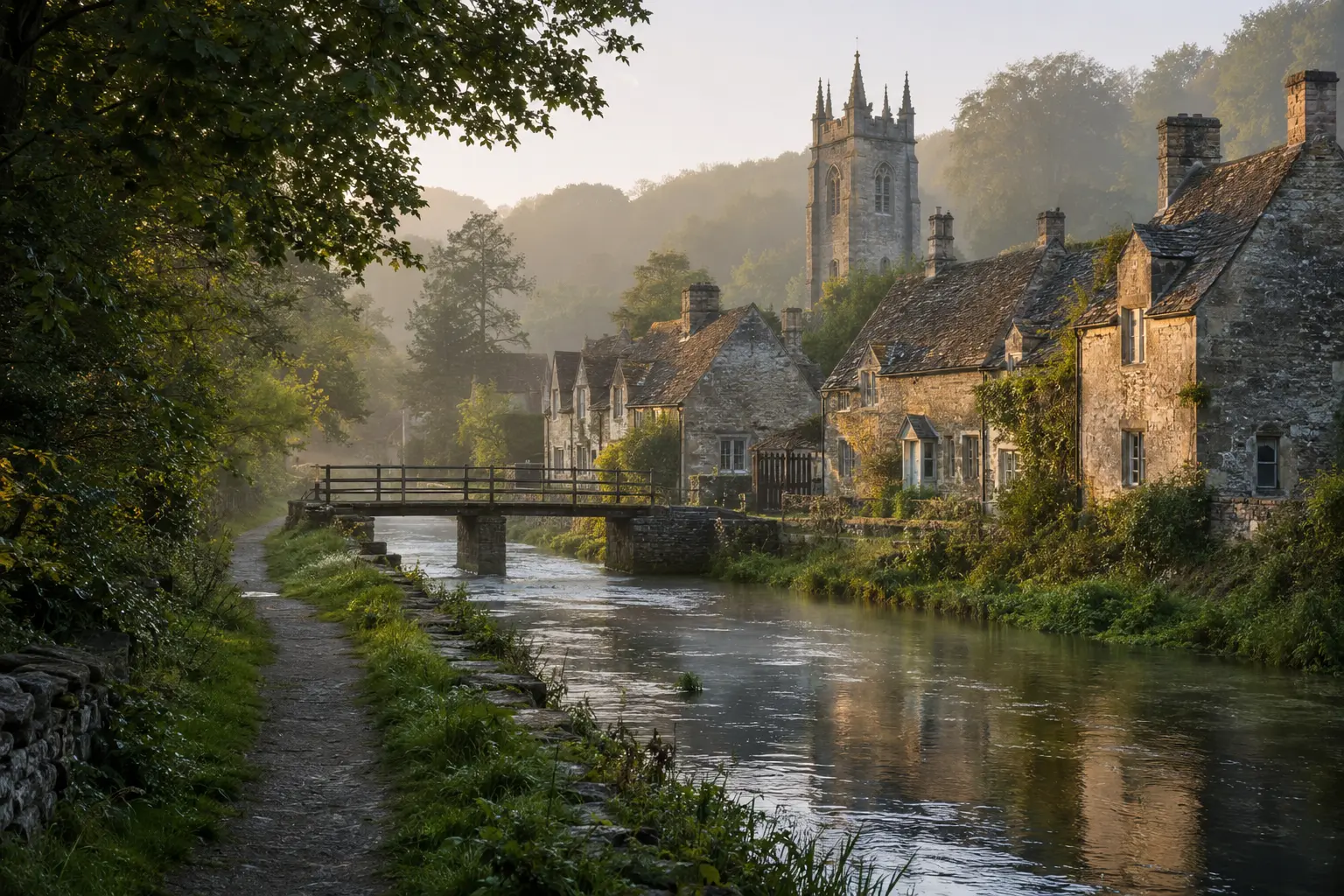
Causton is a composite set: police station, court, library, railway, high street and theatre may come from different real places. Wallingford, Thame and other Home Counties locations supply the pieces; signs, shopfronts, noticeboards, event banners, camera angles and art direction hide the joins.
Opening lanes, greens and church views provide instant village shorthand. The Lee supplied the original Badger’s Drift road. Unit vehicles, lighting, catering and resident liaison sit outside the frame, leaving the audience to accept a single coherent county.
Open the real-location files →Production-craft mini case files
How the familiar effect is manufactured.
Music of murder
The theremin and the score
Jim Parker’s theme is inseparable from Celia Sheen’s theremin performance. Parker retired after Series 20; Evan Jolly took over episodic scoring from Series 21 while the title identity remained intact.
COVID geography
A village made under restrictions
Series 22’s split production changed how locations could be combined. Nick Hendrix described the workarounds used for The Wolf Hunter of Little Worth: the county still looked coherent even when the production could not move through it in the usual way.
Cars as apparatus
One scene, three Volvos
A 2009 Volvo release records Tom Barnaby’s S80, Ben Jones’s S40 and a crew V70 used for interior car scenes. The third vehicle turned a routine conversation into a controlled production set.
Story construction
Social diagram first.
- Establish a distinctive village world.
- Define rivalries and buried history.
- Choose the victim and suspect circle.
- Make the murder method belong to the episode’s theme.
Read the trail